

Members
Group

Logo Designed by
Morgan Anderson


Public
Page
Flag Alpha
Divers Below
Sound of Mull 2026
Text & Photos: Keith Waugh

Additional Photos: Gordon Kirkcaldy, Robert Winters
The weather gods were kind for the weekend of 28th-30th August 2026 for the Clydebanksac Annual trip to Lochaline on the Sound of Mull. We stayed at Highland Basecamp in Lochaline and our boats were “Brendan” with skipper Malcolm on Saturday and “Laurenca” skippered by Andy on Sunday.

The drive up to Lochaline on Friday, via the amazing Glencoe was brilliant. The mountains on both sides of the glen are always awe-inspiring and the scenery is stunning.


The plan was to enjoy an “appetiser” dive at “Rubha Poll an t-Sellisdeire”, more commonly known as “Manse Point”. It did not disappoint. It’s rather important to get the correct tidal conditions for the dive. The dive started off with a descent along the rock walls, always covered in masses of Brittle starfish. Eventually we arrived at the brilliantly colourful soft coral garden. Quite a spectacle!!


This dive was particularly notable for Gordon Kirkcaldy, as it was his 300th dive. Congratulations Gordon, the celebratory Chocolate cake was delicious!!
Onwards then to Highland Basecamp in Lochaline. Having settled in to our bunk rooms and enjoyed an evening meal, the rest of the evening was spent in quiet contemplation of the coming 2 days diving. [Aye! Right! Believe that if you like!?] Say no more!


Saturday morning arrived with fair weather and “ropes off” at 0800. On a very calm sea, “Brendan” headed the short distance up the Sound of Mull to our 1st dive on the “John Preston Wall”. This site consists of a steep rock face with soft corals and plenty places for fish to hide, followed by a rather extensive rubble slope which needs some swift swimming, then another vertical wall for fish, lobsters etc. We found a beautiful 8 cms long Okenia elegans, usually found in the Mediterranean. Scotland is just about its northern limit.
Next up, after a suitable dive interval, was the very accessible “SS Rondo”. She sank in January 1935, having drifted down the Sound of Mull in a violent night time storm and hit Dearg Sgeir near Eileanan Glas. [The full story is in https://www.scottishshipwrecks.com/rondo/] There are plenty of photographic opportunities on this colourful and dramatic wreck.


The weather was still pleasantly summery on late Saturday afternoon, so some of us went for a walk around Lochaline, prepared dive gear for the next day or just sat about relaxing before “pizza time”. Pizzas had been pre-arranged for around 6pm down at the Lochaline Social Club (the local pub), so whilst we waited for the food, drink was drunk and the inevitable diving stories were told, some quite tall, others even taller!!!

On Sunday morning we enjoyed a lie in, as “ropes off” was not until 0900. What a treat!! Owing to some boat issues we were going out on the “Laurenca”, skippered by Andy, with Malcolm coming along to help out.
Again, the sea was calm as we motored up to the wreck “SS Shuna” which sits in around 32 metres depth with about 23 metres to the deck. The waters in the area are minimally affected by tide, so the wreck can be dived at almost any time. She was carrying coal when she sank so can be a bit murky. However, she actually still looks like a ship and has quite a few Pollock swimming lazily around. Visibility was around 6-7 metres.
The last dive of the trip was to be “SS Hispania”, a beautiful and colourful wreck sitting in 30 metres depth with about 16 metres to the deck. However, she is well swept with currents and it is very difficult to get a current free dive. Neverthess, after a hard pull down the shot-line we all arrived safely on the deck, sorted ourselves out as to exactly where we were and swam off to explore this colourful ship.

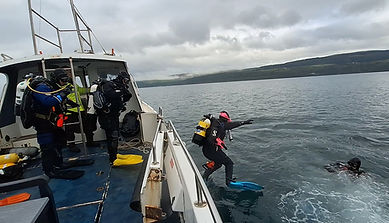


So, that was it! The end of a very successful weekend. Just about an hour or so to head back to Lochaline, repack the cars and head for home via the Corran Ferry. The party consisted of David Richford, Gordon Kirkcaldy, Robert Winters, Shona Winters, Martin Plenderleith, James Huke, Patryk Pieknik, Keith Waugh and guests Nigel Spike and Paul Doyle. A final word about the trip organiser, Gordon Anderson. Sadly, Gordon had to cancel at short notice. He broke his left ankle the week before, when leaving the water, after a dive trip with Martin and myself. What a disaster! Honest gov, it wasnae me!!!!
Thanks to Gordon for all your efforts in making the trip happen. We all thoroughly enjoyed it !!!
She now has quite a tilt over on her starboard side, no doubt caused by the strong currents since she sank in December 1954. [https://www.scottishshipwrecks.com/hispania/] The colours are amazing; orange and yellow soft corals and anemones, red seaweeds, hydroids and many other still life forms. Plenty large and remarkably tame Pollock and the very territorial, colourful Ballan wrasse. The superstructure and the hull are quite open in many places so it is relatively safe to explore the holds, cabins and gangways of the ship as you can always see a way out! The current was still quite strong with plenty plankton in the water by the time we headed up the shot-line for our safety stop before surfacing.
The “Bankies”” Pilgrimage to the Summer Isles
by John Kerr
July 2026
The planned main event for the weekend was the Fairweather V, a 120 ton fishing trawler built in 1974 and sunk after striking the Carn Dearg rocks in the mouth of Loch Broom on the night of 4/5 February 1991.
Based at the Port Beag campsite with a five minute drive to the Old Dornie slip, having been greeted and surviving the wrath of Boreas, the Greek god of northerly winds, who tested both the structural integrity of our tents and our own resolve with 50 knt winds, the boat was launched on the Saturday for the 1st day of the planned weekend dives.


With the swell from the previous evenings winds we started with a scenic dive, now known as the “CSAC Safe Haven” which sits on the North/East side of Tanera Mhor . This consists of a sloping boulder field going from 8mtrs to as deep as you wish, with lots of Scallops, large edible crabs, nudibranch (spotted at 20mtrs ?) & shoals of small fish.
This was followed by a dive on the Boston Stirling, this being steel stern-trawler which sank in August 1985 and now rests in a sheltered cove to the south of Tanera Mhor. It is a 33m ship that lies on her starboard side from 6m at the bow to 15m at the stern and is of generally good condition, with the holds being accessible and very photogenic. There is extensive cover of plumose anemones, soft corals, ascidians, anemones, sea urchins and numerous fish.


Congratulations to James, who successfully completed the BSAC Skills & Development Course, “Chart Work & Position Fixing”. This being successfully proven by navigating us to the Fairweather 5, dropping the shot on the wreck, quick dash to the Isle Martin Wall and back home to Old Dornie. (Round trip of approx. 30 miles). Something he nearly never achieved himself due to being dive bombed by a Great Skua (Bonxie), who clearly had some attitude as we navigated into the Isle Martin slip for a well-earned lunch break😊😊.


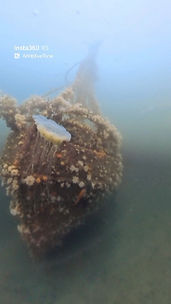

The Fairweather 5 did not disappoint and is still considered by many as their best wreck dive, even James, our own aficionado of the “Breda”, grudgingly accepted that it may have just have the edge 😊 . The vessel remains intact and covered in marine life. With +10mtr visibility.
Our second dive under the direction of James took us to the Isle Martin. This site has some great wall dives on the northern side in the channel between the island and the mainland and with the submarine cliffs that go down almost vertically to around 80mtrs has been described by Gordon Ridley as one of the most impressive wall dives in Scotland.


With the return of Boreas, albeit a little more gentle, our final day took us back to our go to “CSAC Safe Haven”. This after checking out the swell on the wreck of the Jambo, the decision being to leave that for another day 😊 .


In preparing the boat for the journey home we all agreed it was a fantastic weekend, the weather was kind enough to let us get out diving all weekend, achieve our objectives in diving some fantastic sites, participate in the delights of the local hostelry with lots of banter thrown in for good measure. Special thanks has to go to Andy Holbrow of Atlantic Diving Services for giving up his Saturday/Sunday evenings for filling the bottles and providing some local knowledge on the dive sites.
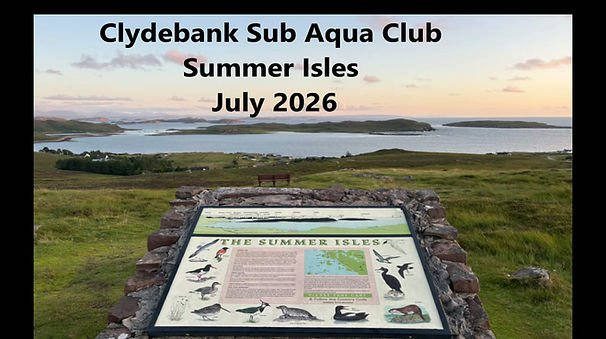
Stuck between two continents
by Michelle & John Morgan
July 2026
This year our summer holiday was a bit different from our normal diving holidays. With the conflicts happening in the East and World Cup to the West we decided to go North and Reykjavik, Iceland was our destination and got booked up through Barrhead travel.
Once booked we then looked into the diving as we wanted to go and do a dive to touch the two tectonic plates. We contacted dive.is who are one of the dive organisation in Iceland. We booked a slot with transfers on the day we wanted then a couple of weeks before we went, we filled out all the necessary paperwork to allow us to dive and also for dive.is to get all the diving gear in our sizes for the day of our dive. Dive.is were very good at responding to emails when we were enquiring about anything.

On the day of the dive the bus picked us up and took us to Silfra which was about one hours drive away from Reykjavik. At times on this journey the scenery was very similar to Scotland and even had Iceland’s version of “the midge” when we arrived at the dive site.
In the car park there was lots of dive.is vans and we were directed to our dive guide (Aneska) who introduced herself and took us to our required van and along with a few other dive.is staff they got all the necessary dive gear for us and got us kitted up before heading to the dive site which was about 150m walk. Due to the temperature of the water being about 4degs 7mm dry suits & gloves (mitts) needed to be worn.
At the dive site we had to wait our turn as there were snorkelling groups in front of us entering the water. Once the snorkelling groups in front were clear we entered and began our dive. At our briefing we were told that due to the terrain/ rock formation the dive at times would be very shallow and if you saw any fish life you would be very lucky.
In the water the visibility was great, and the temperature didn’t feel that cold. Being able to see the surface reflection in the water was amazing. Aneska had said at the briefing when we got to between the two tectonic plates she would indicate and then one by one, we could touch them and get photos taken. After this we continued on with the rest of the dive following the contours of the terrain and at times ending up very shallow due to having to go over the rocks as there wasn’t a gap to go through. Overall dive time was approximately 30 minutes to a depth of 15m maximum.


This was a different experience from any other dives that we have done and even though there was no fish life the dive was amazing. It was a great experience and one to tick off if we had a bucket list.
Thanks to Dive.is for all their help on the day.

The Bankies Head out for the Summer Solstice
June 2026
By John Kerr
Photos by John Kerr, Harry McGinley, Cailean MacLennan
Plans had been made, the crescent moon had joined Venus, Jupiter and Mercury in a low, glittering line up in our western sky. Requests had been made to our long suffering partners, our prayers & sacrifices had been made and appeared to have been well received by the Norse Goddess “Sunna” who drives the chariot of the sun across the sky. High pressure and an almost cloudless sky greeted us at Minard, Loch Fyne, our designated boat launch site for 0924hrs, the official time for the Summer Solstice of 2026.


The plan was to dive Fraoch Eilean (known as Seil Island to CSAC), followed by Black Lass Cove in two waves skippered by John K & Don respectively, with a BBQ being fired up for the scheduled arrival of the shore party (Lee, Sue and the girls, Eilish & Robert & Pete’s daughter & Son). The dive teams being Don, Pete, Jill & Cal followed by Robert, Shona, Harry.


Fraoch Eilean (known as Seil Island to us) shared its reflection with the clouds in the glass like water as the birds and seals greeted us on our arrival. The buzz of the drone flying above let the skipper (John K) know that the 2nd team had arrived.


Visibility was reported to be 2 to 3 mtrs for both dives, Harry & Jill were delighted to be greeted by an Octopus as they entered the water at Black Lass cove. There was few fish about but lots of the usual critters to entertain.


The local community at Minard have a lovely picnic area which provided the tables and seating for the BBQ, thanks to Don for organising the day (diving & BBQ), and procurement of the food, special thanks to Jill for making the journey from Arbroath and Robert for the “Clootie Dumpling” – Truly awesome 😊.


Fun at the Farnes
10th May 2026
by Helena Fox, Jill Rollo, Harry McGinley, Martin Plenderleith
On 10th May, a healthily-sized group of CSAC divers (plus a few assorted friends) traded a lie in to drive south at the crack of dawn and cross the border to Seahouses harbour in Northumberland. Ably skippered by Serenity Boat Tours, we enjoyed the views and the sunshine (less so the sea sickness) as we headed out to the Farne Islands. The huge crowds of seals on the rocks did not equate to much underwater action, although some of the group were treated to a few enjoyable encounters. However, the visibility was excellent, with no torches required down to 20 metres, and the rocky, kelp-filled seascape was a welcome change of scene from our usual west coast diving. Lobsters, Butterfish, and Scorpionfish were all encountered, as well as a couple of curious Ballan wrasse that challenged us to staring contests. The anemones and sea urchins also provided lots to admire. For some of us, it was our first experience of diving from a hard boat, complete with hot drinks and a lift – a luxury that will make it hard to return to the harsh realities of launching into a RIB from the water. Thanks to Don for organising a brilliant day of diving that was well worth the lack of sleep.


We headed out to Lower Loch Fyne for a couple of dives out of Portavadie. The surface conditions didn’t look all that promising, but once underwater we were treated to surprisingly good visibility — so much so that torches stayed off for most of the dives.
There was plenty of life about too. Highlights included two very large conger eels, a solid lobster, a handful of squat lobsters (including some very orange ones), brown crabs, and what we’re fairly sure were long-legged spider crabs making an appearance.
All in all, two really enjoyable dives and a great reminder of how much is going on beneath the surface in our local waters. Not bad for somewhere just a couple of hours from home.
Thank you John Kerr for taking us out in the Club boat and keeping us safe. We were treated to some EXCELLENT visibility below the waves.
Portavadie, Loch Fyne
by Don Milesh
11/04/2026


Easter Dive Trip to Bute
April 2026
by Don Milesh
A group of Clydebank Sub Aqua Club Ocean Divers, along with a couple of instructors, travelled across the Firth of Clyde to the Isle of Bute for a multi-day diving trip over the Easter weekend. This trip provided an excellent introduction to multi-day diving, giving our newer divers valuable experience ahead of the busy summer season.


Across several days, the group developed and applied a range of practical skills, including dive planning, boat preparation, boat diving, and cylinder filling. The format of diving, reviewing, and repeating allowed divers to quickly build confidence and competence.

The setting itself offered a notable change from the typical shore-based diving we usually do, with the scenery and conditions of a Scottish west coast island providing an ideal environment for both learning and enjoyment.

Marine life highlights included sea anemones in abundance and sightings of two octopuses, alongside a variety of other typical local species.
Overall, the trip was a highly successful blend of experience and exploration, and a strong step forward for the Ocean Divers as they prepare for the season ahead.
Ocean Divers Boat Dive Day
by Don Milesh
28/03/26
We kicked off the first boat diving of 2026 with a training-focused day for our new Ocean Divers along the north bank of Loch Fyne.

Diving sites included Kenmore Point, Adam’s Reef, and Stallion Rock, providing ideal conditions for introducing core boat diving skills while experiencing classic Scottish sea loch environments.
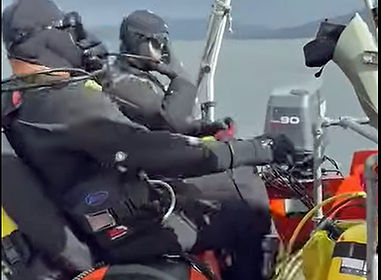
Marine life highlights included a large lobster, an impressively sized conger eel, and plenty of squat lobsters and hermit crabs across the sites. Kenmore Point also showed a significant amount of scattered marine debris, serving as a reminder of the ongoing need for responsible diving and conservation efforts.
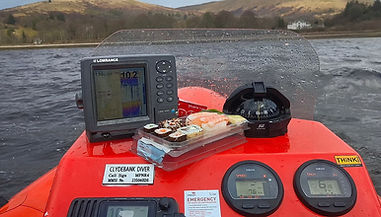
The day wasn’t without its lessons. At an undisclosed location, a valuable (and slightly expensive) lesson was learned — sometimes experience comes at the cost of a new DSMB and Lomo reel.

Overall, a highly successful and rewarding start to the boat diving season, combining training, real-world experience, and some excellent diving.

Intrepid Clydebank members take to the water in early March for some BSAC Ocean Diver training activities. Perhaps you can guess the Dive Site!?

In February, Lee Tony Marsden, met up with diving friends from Wrexham Seals Diving Club, to explore the delights of Capernwray in Cumbria. The water was pretty chilly but the underwater visibility was amazing!!
February 2026
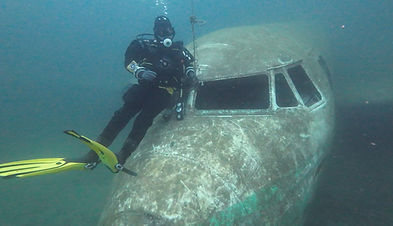


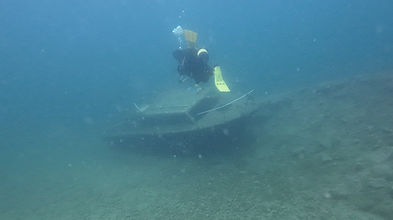

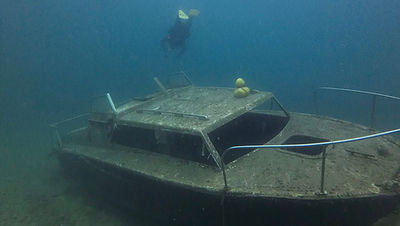
Don Milesh writes; "In early February a handful of CSAC divers snuck away to Oban for a couple of dives with our friends at West Coast Diving on the SS Breda. Awesome to get some big-ish boat diving done on one of the big wrecks close-ish to home — perfect warm-up for the summer of diving ahead."


First Dive of 2026 for Cameron, Gordon, Jemma & David. Gordon says; "Fantastic choice to go to St Catherines, Loch Fyne. We've just had the pleasure of a seal visiting, a stunning octopus and Davie's Fantastic rolls and Sausages."



First Night Dive of Winter 2025
Photos by Jill Rollo/Mowatt
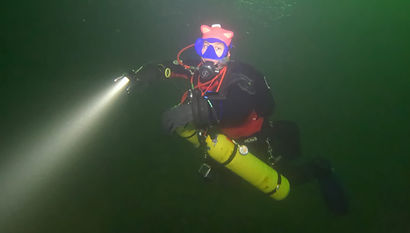
3 members of Clydebank Sub Aqua Club braved the very cold night of 20th November, to enjoy the first Clydebanksac Night dive of the winter season, since the clocks changed back to GMT. The party were Jill Rollo/Mowatt, Robert Winters and organiser David Ryrie.


The Dive site was St Catherines Seal Reef on Loch Fyne, meeting at about 7pm, after work. Jill came over from Arbroath, for goodness sake!! The air temperature was 1degree C as the 1st dive on the reef started around 7.30pm with a fair amount of life out and about, including a shoal of fish above the reef. Fortunately the water temperature was a balmy 9-12 degrees C, maximum depth 29metres and a 45 minutes duration with the underwater visibility in the darkness of around 2 to 3 metres. The chilly dive interval was passed trying to stay warm and have something to eat and a hot drink before finally entering the water for a 2nd dive to 22 metres for 44 minutes. It was around midnight when the long trek home started whilst most of the less hardy members of Clydebanksac were tucked up in bed.


Text: Keith Waugh
Red Sea Liveaboard
Story & Photos by David Richford
So it started with a WhatsApp message from Gordon Anderson in August 2024, for anyone interested in a week Liveaboard to the Red Sea next year, the trip would cover the Brothers/Daedalus and Elphinstone reefs. With viz at 20 metres plus, diving in a wet suit and water temperatures of 28 degrees, I was in.
The day had arrived, 4 October 2025, flying from Glasgow to Hurghada then a short over land journey to Port Ghalib where our home for the week was waiting, Sea Wolf Dominator.
Our itinerary was 17 dives, 3 dives a day for 5 days and 2 dives on the 6th day. Weather forecast was for some windy conditions; a slight adjustment was made to our destinations.


First day ropes off at 7am we headed for Abu Dahab IV for a shakedown dive to check weights and dive operations, a giant stride off the boat, weights checked l descended to find a Blue Spotted Ribbon-tail ray, then a Crocodile fish relaxing on the seabed, Lionfish, Masked Damselfish and Pufferfish, it was a great start to the week. After lunch we moved to Abu Dahab III where our 2nd dive and night dive would end our first day. With the last diver aboard, we started a 5 hour journey to Elphinstone reef, forecast was for some rough seas, so everyone hunkered down for the night.


Arriving at Elphinstone reef in the early hours, wakeup call was 6am for a 6.30am briefing onto to the Zodiacs and into the water for 7am, [Elphinstone reef south] No breakfast until after our first dive, as I descended, there at 30 meters I watched a Turtle having its breakfast!!! what a sight. On surfacing into 2 meter swells getting back onto the Zodiac was challenging. No finesse here, you where flung onboard, safely transported back to Sea Wolf for breakfast, 2nd dive at Elphinstone Reef North then 3rd dive at Ras Torombi.


The 3rd day brought us to Big Brother South once again first dive is before breakfast. A whale shark was spotted on this dive and 2x Large Morays in the rock face. 2nd dive on Big Brother west and the wreck Aida, 3rd dive Little Brother North. For the next day we move to Daedalus reef east which is a 10-hour sail away. Spending 2 days here we would spot a Hammerhead shark, Oceanic Whitetip shark and a Silky Shark, shoals of Trumpetfish and large Barracuda and the first time for me a Torpedo ray and Potato Grouper., leaving Daedalus behind we were heading to Marsa Shona. Here we would not disappoint with a turtle, Sting ray, Scorpion fish and Feather Tailed ray.
This week has been full of challenges and some great experiences, having Nitrox mixes of between 28%-30% l had to be aware of my depths. I would like to thank Gordon Anderson for organizing the trip, Regal dive/Emperor divers and the crew of the Sea Wolf Dominator.


